

Summary
-
Berberine is a plant compound that supports healthy blood sugar, cholesterol, and metabolism
-
It activates AMPK, the body’s metabolic switch, to regulate insulin and energy
-
Clinical research backs its role in managing type 2 diabetes, PCOS, and inflammation
-
SugarMD Super Berberine uses dihydroberberine for 5x better absorption and fewer side effects
-
Always consult your doctor if you are taking medications, especially for diabetes or blood pressure
Today we are talking about the benefits of berberine and berberine side effects in detail. Recently, berberine supplements have come under the spotlight in the Western world because of their ability to regulate blood sugar levels as one of the best diabetic supplements to activate the longevity pathway AMPK (adenosine monophosphate-activated protein kinase), which is the metabolism’s “master switch,” which helps with weight loss and even fight cancers.
Because of all these advantages, berberine is a beneficial supplement for delaying aging, and diabetes and increasing longevity. So in this blog, we will talk about berberine benefits and berberine side effects.
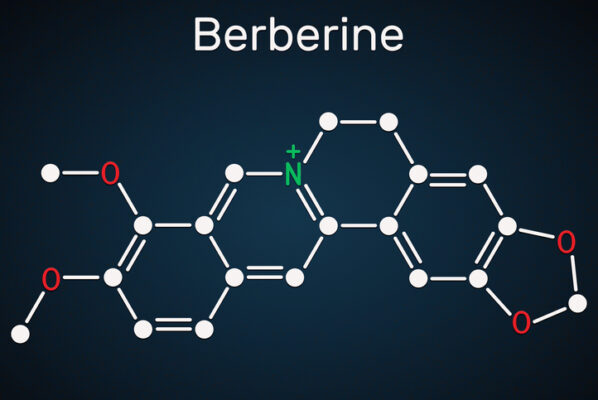
Berberine C20H18NO4, herbal alkaloid molecule. The structural chemical formula on the dark blue background. Illustration.
The positive benefits of berberine in diabetes and obesity treatment are partly due to stimulation of the AMP-activated protein kinase (AMPK) signaling pathway. It is a mouthful, isn’t it? AMPK, an enzyme found in cells, is a metabolic master switch that helps control cell energy.
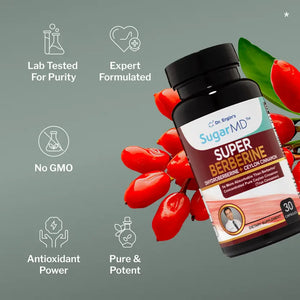
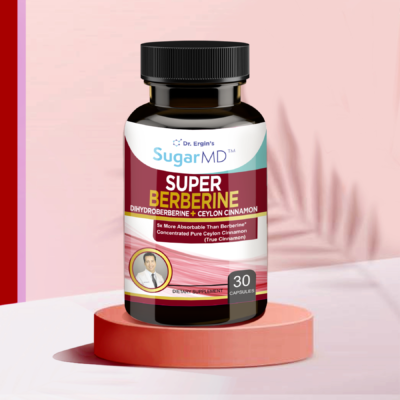
It’s one of the pathways we want to trigger With SugarMD Super Berberine, a blend of dihydro berberine and Ceylon cinnamon. If you remember, dihydro-berberberine is five times more absorbable than berberine and has fewer gastrointestinal adverse effects. Berberine has been the subject of many investigations. Those studies have revealed that it can control blood sugar levels, help lose weight, and improve cholesterol in several ways.
Top 5 Evidence-Based Benefits of Berberine
Berberine has been studied across a wide range of metabolic conditions. Let’s break down the top five benefits that are supported by solid scientific research.
1. Blood Sugar Control and Diabetes Support
Berberine is perhaps best known for its role in managing type 2 diabetes. It improves insulin sensitivity and reduces glucose production in the liver by activating AMPK.
In one clinical trial, participants with type 2 diabetes who took 1 gram of berberine per day saw significant improvements in fasting blood glucose and hemoglobin A1c levels, results comparable to metformin, a standard prescription medication.
2. Heart Health and Cholesterol Improvement
Heart health is another area where berberine really shines. Let’s look at what it does for your cholesterol profile and cardiovascular risk.
Berberine has been shown to help lower LDL cholesterol, triglycerides, and increase HDL cholesterol, all key indicators of heart disease risk.
One meta-analysis found that berberine lowered total cholesterol by 18 percent, LDL by 21 percent, and triglycerides by 36 percent in people with high cholesterol.
3. Weight Management Support
Weight loss is a common goal for many, and berberine might be able to lend a hand. Here's how it may support your efforts.
Studies show it can help reduce body mass index and support weight management, particularly in individuals with obesity, by improving how the body burns fat and regulates hormones tied to hunger and energy.
That said, berberine is most effective when combined with a healthy diet and consistent movement. It is not a shortcut, but a companion to a lifestyle upgrade.
4. PCOS Symptom Relief
Women dealing with PCOS often face insulin resistance and hormonal imbalance. Berberine appears to target both.
Research suggests that berberine may improve insulin function, regulate androgen levels, and support more regular menstrual cycles in women with PCOS.
Its insulin-sensitizing effects make it a promising alternative or addition to traditional treatments like metformin, especially for those sensitive to side effects.
5. Gut Health and Anti-Inflammatory Effects
Gut health connects to just about everything, from mood to immunity. Berberine supports digestive balance in a few important ways.
It acts as a natural antimicrobial, helping to reduce harmful gut bacteria while supporting beneficial ones. It also fights inflammation in the digestive tract, which makes it helpful for people with IBS or general gut discomfort.
Lesser-Known Potential Benefits
Some benefits of berberine are still being researched, but early findings look promising.
Emerging Research Areas
Recent studies suggest berberine may help:
-
Protect the brain from neurodegenerative diseases by reducing oxidative stress.
-
Improve liver function in people with non-alcoholic fatty liver disease (NAFLD) by reducing fat buildup.
These are exciting possibilities, but more human trials are needed to confirm their effects long term.
How Does Berberine Work?
When cells need energy, they turn to ATP (adenosine triphosphate). ATP is often referred to as the cell powerhouse because it supplies cells with the energy they need to function. If ATP levels are low, your cells won't be able to function correctly. Fortunately, berberine can help to replenish ATP supplies by activating AMPK (AMP-activated protein kinase).
AMPK is a signaling pathway that modulates the production of ATP. In other words, it helps to ramp up fatty acid oxidation, which enhances your energy levels and helps you burn fat. Even more impressive is that berberine is just as effective as metformin at managing blood sugar levels.
Metformin is a well-known prescription medication for type 2 diabetes and high blood sugar levels. But unlike metformin, berberine doesn't come with any adverse effects. That's why berberine is such a popular supplement for people looking to improve their energy levels and manage their blood sugar levels.
Using Berberine Safely: Dosage and Tips
Knowing how to take berberine makes all the difference in getting results without side effects.
Standard Protocol
The typical dose of berberine is:
- 500 mg, two to three times daily
- Take with meals
- Do not exceed 1,500 mg per day
SugarMD Super Berberine Advantage
This isn’t your average supplement. Here is what makes it stand out.
Enhanced Formula
- Dihydroberberine combined with 20x concentrated Ceylon cinnamon
- Equivalent to 1,000 mg of standard berberine
- Formulated by doctors for maximum effectiveness
- Optimized for absorption, stability, and tolerance
- Higher bioavailability means you need less, and experience fewer side effects. It’s a better experience for your body and your daily routine.
BERBERINE SUPPLEMENTS VS METFORMIN
Although berberine and metformin are distinct structurally, they have several benefits in common. However, many individuals, for various reasons, are wary of metformin. Berberine is a type of supplement that is helpful in the management of diabetes. It is structurally similar to metformin, and like metformin, it helps to increase insulin sensitivity and lower blood sugar levels.
However, there are some important differences between the two supplements. For one, berberine is derived from a plant, while metformin is a synthetic drug. Additionally, berberine has been shown to have other health benefits beyond blood sugar control, including improving cholesterol levels and reducing inflammation.
Finally, berberine is not associated with severe side effects, unlike metformin. Overall, berberine is a safe and effective option for those looking to manage their diabetes. Click on this link to learn more about metformin's side effects.
Both berberine and metformin are beneficial in helping to regulate blood sugar levels, perhaps manage weight, and lower cholesterol levels. On the other hand, their adverse effects are quite different. And this is one of the numerous reasons berberine may be a better alternative for some than metformin. Another advantage is that you can purchase it without a doctor's prescription.
Can Berberine Help with Weight Loss and PCOS?
Relief of PCOS Symptoms PCOS, also known as polycystic ovary syndrome, can result in issues like excessive cholesterol, insulin resistance, and difficulty reducing weight. According to specific research, berberine improved insulin response decreased waist-to-hip ratio, and controlled cholesterol in women with PCOS.
Weight loss Although berberine is not a miracle weight-reduction drug, it might aid in weight loss in those with a body mass index (BMI) of 30 or above. According to two studies, taking a berberine supplement for three months causes noticeable weight loss. This could be as a result of berberine's role in the regulation of insulin and other hormones that control your fat cells.
Berberine Adverse Effects
Berberine is a plant extract that is safe to take orally. While berberine is generally safe, it can cause some side effects. The most common side effect is gastrointestinal distress, including nausea, vomiting, and diarrhea. Berberine can also cause lightheadedness, drowsiness, and dry mouth.
In rare cases, berberine can cause more severe side effects, such as liver damage and low blood pressure. To help combat potential side effects, we have used dihydro berberine in SugarMD Super Berberine, a modified form of berberine to allow better absorption, along with 20 times concentrated Ceylon Cinnamon. They are still 100 percent organic and natural.
Who should not take Berberine Due to Unknown Effects?
Pregnant and breastfeeding mothers should avoid berberine because it can cross the placenta and harm the unborn child or pass through breast milk to the baby during breastfeeding. Also, if you already have a low blood pressure line of 100/50 or lower, taking berberine may cause it to drop even lower, so use it with caution and under the supervision of your doctor.
Check out our SugarMD super berberine product at sugarmds.com and see if it will fit your needs! See you in the following video. To Summarize: Berberine supplements have recently gained popularity in the West due to their ability to regulate blood sugar levels as one of the best diabetic supplements to activate the longevity pathway AMPK (adenosine monophosphate-activated protein kinase), which aids in weight loss and cancer prevention.
Berberine helps with aging, diabetes, and overall longevity. This blog discusses the benefits and drawbacks of berberine. Berberine promotes the AMPK signaling system, which aids in treating diabetes and obesity.
Conclusion
Berberine offers real, research-backed support for blood sugar control, cholesterol management, PCOS relief, and more. But it is not a substitute for medication, and it should always be used under medical guidance.
If you are ready to try a supplement that combines science, quality, and physician insight, we recommend starting with SugarMD Super Berberine. It is lab-tested, thoughtfully formulated, and trusted by thousands for a reason.
FAQs
What is berberine most commonly used for?
Berberine is mainly used for supporting healthy blood sugar, improving cholesterol, aiding weight management, and reducing inflammation.
Can I take berberine with my current medications?
Berberine can interact with diabetes medications, blood pressure medications, and certain antibiotics. Always speak with your doctor before combining berberine with prescription drugs.
How long does it take for berberine to work?
Most people begin noticing changes in blood sugar, digestion, or energy within 2–4 weeks, but full metabolic benefits may take 8–12 weeks of consistent use.
Is berberine safe for long-term use?
Berberine appears safe for most adults when used at recommended doses, but long-term use should be monitored by a healthcare provider—especially if you take medications.
Who should avoid berberine?
Pregnant or breastfeeding women, infants, and individuals with very low blood pressure should avoid berberine. Those with chronic medical conditions should consult a doctor first.
Can berberine help with PCOS?
Yes. Research shows berberine improves insulin resistance, supports hormone balance, and may help regulate cycles in women with PCOS.
Does berberine help with weight loss?
Berberine may support modest weight loss by improving insulin sensitivity, reducing fat storage, and supporting metabolism. It works best alongside healthy eating and movement.
About the author
Who is Dr. Ergin? Dr. Ahmet Ergin is an endocrinologist interested in and passionate about diabetes care. Dr. Ergin earned his medical degree with honors at Marmara University School of Medicine in Istanbul, Turkey. Then, he completed his internal medicine residency and endocrinology fellowship at Cleveland Clinic in Cleveland, Ohio. He is a board-certified Internal Medicine and Endocrinology, diabetes, and metabolism physician.
He is also a certified diabetes education specialist. Disclaimer: Any information on diseases and treatments on this website is for general guidance only and must never be a substitute for the advice your doctor or other qualified healthcare professional provides. Always seek the advice of your physician or other qualified healthcare professional with questions you may have regarding your medical condition.